Render After Effects Templates from  or
or 
Automated After Effects rendering system that programmatically generates motion graphics (ex. lower thirds, title cards) by pulling data like speaker names, titles, and session information directly from the database you use to track the production, and renders them remotely in After Effects, delivering files straight to editors' work folders, with real-time updates via notifications.
Case Study
Challenge
Creating brand-specific graphics for conferences with hundreds of speakers required editors to be onboarded to a client's production management system (Airtable, Google Sheets), then locate the right information, and manually enter speaker names and titles in After Effects or Premiere Pro. This lead to spelling errors, inconsistent formatting, and production bottlenecks. And the inevitable last-minute speaker changes meant re-rendering and re-delivering graphics to editors, often after videos were already finalized.
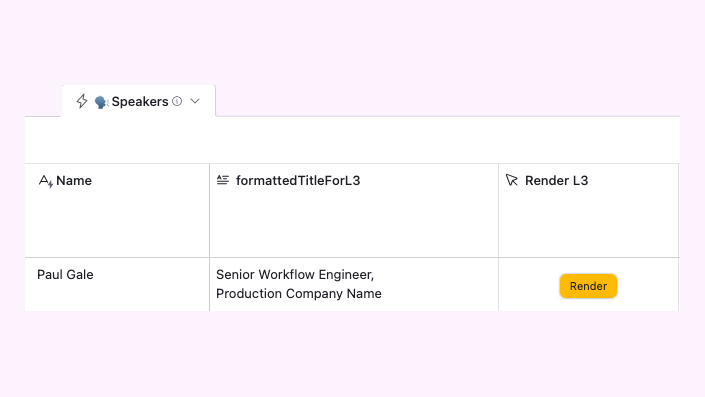
Airtable interface for rendering speaker information — Google Sheets would look similar
Solution
Developed a system that pulls data directly from client-approved rows in the database, renders graphics using project-specific After Effects templates, and delivers files to the editor's work folder, with a notification to the editor when rendering is complete. In short, the speaker information is always client approved, and editors never need to open After Effects or handle the information directly.
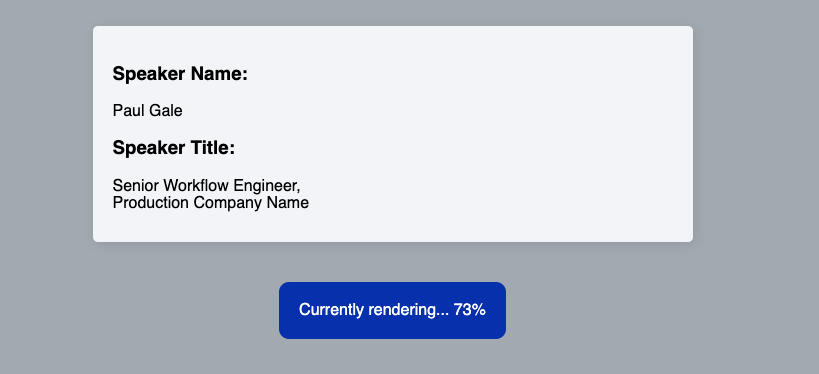
Mid-render status update in web interface
Results
Reduced graphic creation time from minutes to seconds, enabled non-technical producers to generate graphics, and, crucially, allowed for instant updates free of spelling errors when information inevitably changed.

Final result, based on client-approved, custom After Effects template
Implementation
A Node.js service which interfaces with After Effects via Nexrender, processes batch jobs from Airtable data, and automates delivery to editor work folders with proper naming conventions.
Impact
Freed up editors from After Effects work entirely, eliminated graphics as a bottleneck for events with thousands of speakers, avoided any copy editing errors on part of the production team, and saved 100s of hours across all conferences.